Software connected to physical equipment
Hardware & industrial systems
Manufacturing software integrated with PLCs, conveyors, and label printers, followed by a decade of products that talk to printers, GPS trackers, and wallets.
- Where
- Grupo Leitz / British American Tobacco, then Wasabi
- Role
- Software integration, not hardware or firmware design
- Equipment
- PLCs, conveyors, label and receipt printers, GPS trackers
- Period
- 2012 — 2014, and ongoing at Wasabi
plant floor PLCs · conveyorslabeling barcode labels · industrial printerswarehouse operations point of sale ESC/POS over WebUSBfleet GPS trackers → dispatchmobile camera QR · Wallet passes
Manufacturing integration
From 2012 to 2014, I worked as a senior analyst and developer at Grupo Leitz on software for a British American Tobacco manufacturing operation. The software connected to the equipment on the floor and the processes around it:
- PLCs controlling production equipment
- Conveyor systems moving product through the line
- Barcode labeling for product identification
- Industrial printing on the line and in the warehouse
- Warehouse operations that depended on all of the above being correct
My role was software integration: building and maintaining applications that exchanged data with this equipment and supported the operators who ran it. I didn't design the hardware, the PLC programs, or any firmware.
What it taught me
Software connected to machines fails differently. A bug doesn't show up as an error page. It shows up as a stopped line, a label on the wrong box, or a pallet the warehouse can't account for. That changed how I build software:
- Understand the physical process before writing code: what the operator does, what the machine expects, and what happens when either one is wrong.
- Treat every external device as unreliable. Plan for timeouts, retries, and duplicate signals, and make each operation safe to repeat.
- Make the system's state visible to the people on the floor, not just in a log file.
- Changes reach production carefully. Rolling back after a bad label run is much harder than rolling back a web deploy.
I've carried these habits into everything since, including the products below.
Receipt printing
Kōan, the hotel system my team at Wasabi builds, prints fiscal invoices, credit notes, and cash closures on Epson receipt printers directly from the browser. The application generates raw ESC/POS commands for formatting, the character code page, paper feed, and cut, then sends them to the printer over WebUSB. Front desks don't need a print server or a desktop application.
Fleet tracking
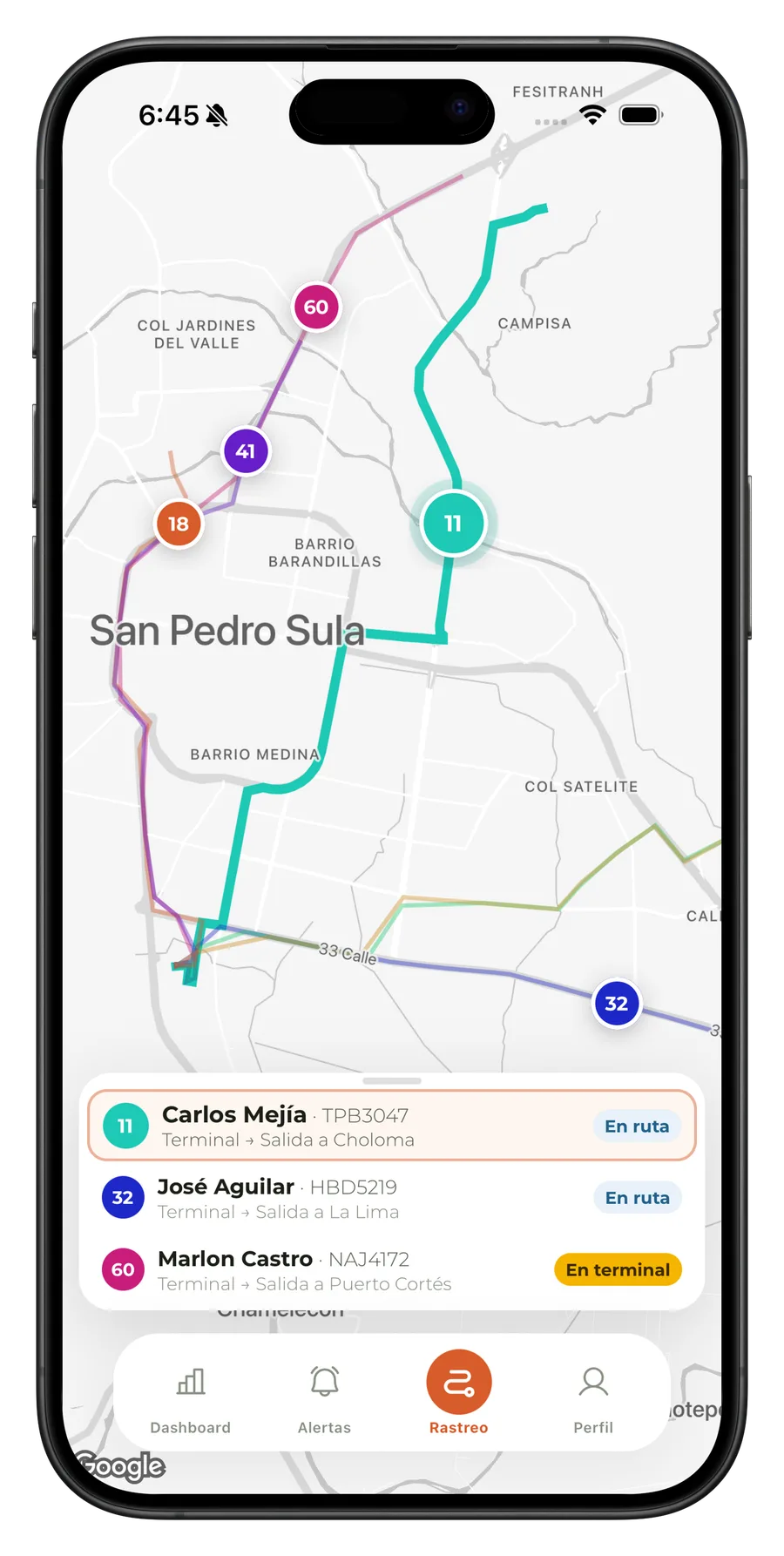
For ETRUCH, a bus fleet operator, Wasabi built an operations platform that integrates GPS trackers through the Optimus GPS tracking platform. Devices, positions, events, and geofences are synced into the system. Tracker data creates automatic check-ins, so the system doesn't depend on drivers reporting in, and dispatchers follow the fleet on a map that refreshes every 30 seconds or so.
Wallets, cameras, and native code
- Apple and Google Wallet. PerkPass issues signed Apple Wallet passes and pushes updates to devices through APNs, and creates Google Wallet objects through Google's API. The pass on a customer's phone works like a physical loyalty card that updates itself.
- Camera scanning. Staff apps for PerkPass, PR Nail Studio, and DiCosmetic scan customer QR codes with the phone camera to find customers and award points.
- Native modules. When an SDK only exists natively, we bridge it. Kōan's guest app wraps Cybersource's iOS and Android tokenization SDKs in a Swift and Kotlin module so card details are tokenized on the device.
Stack
PLC integration · Barcode labeling · Industrial printing · ESC/POS · WebUSB · GPS tracking APIs